... so this is what a beet looks like.
They are a root vegetable, typically red or purplish in color, with long green stems and a tail like a rat. Not to be confused with a radish, which is much smaller in size.
The beet became highly commercially important in 19th century Europe following the development of the
sugar beet in Germany and the discovery that
sucrose could be extracted from them, providing an alternative to tropical
sugar cane. It remains a widely cultivated commercial crop for producing table sugar.
The leaves and stems of young plants are steamed briefly and eaten as a vegetable. A large proportion of the commercial production is processed into boiled and sterilised beets or into pickles. In Eastern Europe beet soup, such as cold borsch, is a popular dish. Yellow-coloured garden beets are grown on a very small scale for home consumption.
Beetroot can be peeled, steamed, and then eaten warm with butter as a delicacy; cooked, pickled, and then eaten cold as a condiment; or peeled, shredded raw, and then eaten as a salad. Pickled beets are a traditional food of the American South.
One increasingly popular preparation involves tossing peeled and diced beets with a small amount of oil and seasoning, then roasting in the oven until tender.
A traditional Pennsylvania Dutch dish is Red Beet Eggs. Hard-boiled eggs are refrigerated in the liquid left over from pickling beets and allowed to marinate until the eggs turn a deep pink-red color.
Betanins, obtained from the roots, are used industrially as red food colourants, e.g. to intensify the colour of tomato paste, sauces, desserts, jams and jellies, ice cream, sweets and breakfast cereals.
Beetroot can also be used to make wine.[4]
The consumption of beets causes pink urine in some people.
Why, you ask, am I blogging about a beet?
Well, I'll tell you. I am blogging about beets and the history and use of such a food, because last weekend while I was working on the Juice Truck at the Nike Cup Soccer Tournament at the Met Oval, I had one parent after the next approach me looking for smoothies. When they found out I didn't have smoothies, I had juice, the next questions were along the lines of...
"Well, what kind of juice ya got?".... "What's Kale?" (which I can understand)....
"What's a beet?".... which just makes me sad. "Really?", I thought. "You don't know what beets are? You don't recognize this red bulbous root? Really?"... but it was true. Many of these folks were totally unfamiliar with beets and they certainly weren't about to order our famous Hot Pink Limeade (which features The Beet). Granted I was in old-school Queens, but still...
So here it is. The beet. In all its Glory. I highly reccomend reading Tom Robbins' book Jitterbug Perfume for a more intellectual take on the historical role of the beet in time travel, chaos, and tantalizing smells...
Oh, and while I'm at it, here America.... is KALE!!!

and this is what a smoothie looks like.....

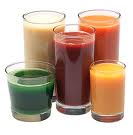
and here is a picture of just plain old, extracted JUICE. also smooth, but not made by blending with milk or ice cream or yogurt, just extracted from the fresh fruits and veggies, using a juice extractor. simple. delicious.

I have nothing more to say about it except that I am concerned for us all and I am grateful for Jamie Oliver.